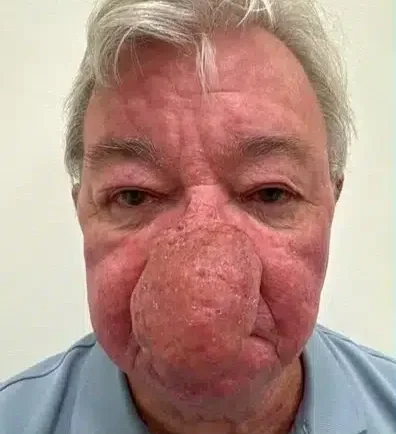
Living with rhinophyma and told there's nothing that can be done?
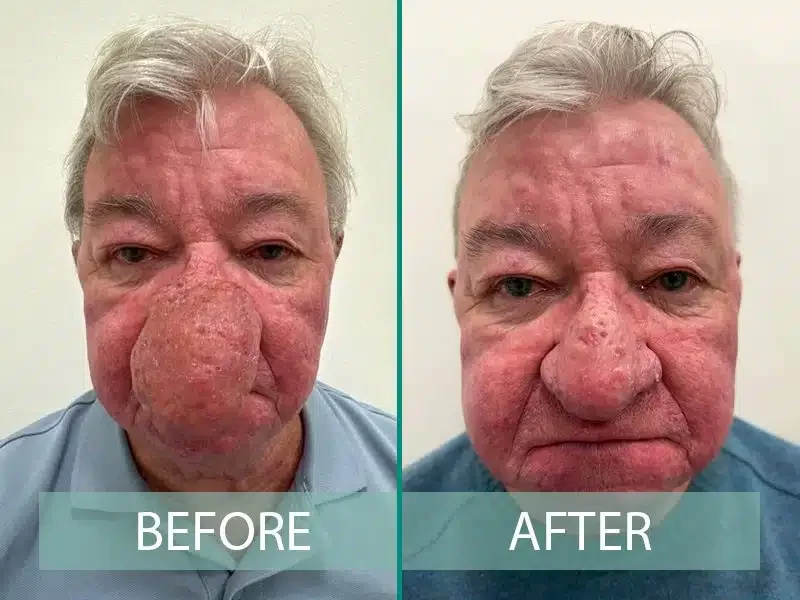
Dr Cormac uses the only fully ablative lasers in Scotland, and one of the few UK doctors with real, hands-on experience treating Rhinophyma.
Rhinophyma is often misunderstood as "just rosacea" or dismissed altogether. We know it can take years before someone finally takes it seriously. Unfortunately many of our patients have suffered for years, languishing on routine waiting lists and becoming more withdrawn.
1. Book a consultation with Dr Cormac
2. Get an honest assessment of the stage and severity
3. Treat it with Full Field Ablative Laser Resurfacing, tailored to what's actually there
Rhinophyma is an enlargement through “phymatous” change of the nose. A form of Rosacea, it can also affect the chin and ears. While uncommon, it is often distressing due to the impact on such a central feature of the face. Most patients are content for their nose to be “invisible”, but Rhinophyma makes it much more obvious.
The underlying problem is inflammation and overgrowth of the sebaceous gland tissue. This is why patients frequently describe squeezing sebum (white stuff) from their enlarged pores.
Typically affecting older males, it is 5 times less likely to affect females.
While medication can be used to treat the condition, even powerful medications such as Isotretinoin (normally used to treat acne) have very limited effect.
Removal of the overgrown tissue is the most effective treatment. We find the NHS doesn’t prioritise this, with patients on routine waiting-lists for many years. Further, with traditional surgery, results are suboptimal and recurrence rates are higher.
Using CO2 laser, we can achieve a better “normalisation” of nasal shape and, due to the way the skin heals, recurrence rates are lower.
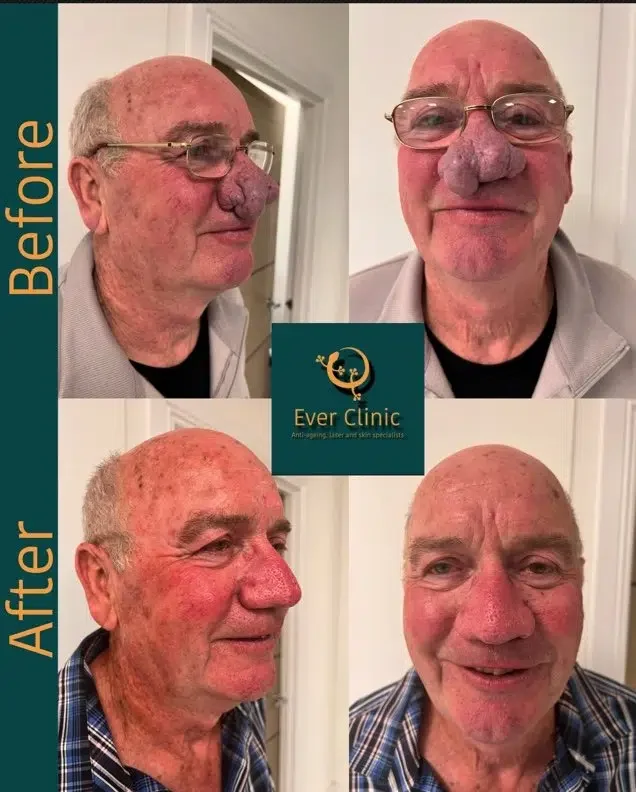
How many treatments are required?
Treatment is often done in 1 session but there is always a possibility that a “touch-up” session may be recommended. We are particularly seeking to limit scarring and as such aim for a slightly conservative approach.
Is treatment painful?
Treatment is usually well tolerated due to the use of medication including local anaesthetic injections. We also offer entonox gas treatment (commonly used in childbirth) for patients to use if required.
How long does treatment take?
This is usually a slow procedure, taking a minimum of 1.5hrs and often up to 3.5hrs. We have had rare 5hr treatments.
How long does recovery take?
Because this is technically a very strong form of resurfacing, it takes time to grow new skin. It is typical that healing takes 2-3 weeks and this is occasionally delayed.
Are there any recognised complications?
The nose heals well but scarring does happen sometimes, despite being slightly conservative. We also see occasional patients having delayed healing such that we may need to use dressings for a few weeks.