Xanthelasma Palpebrarum
Got lesion you'd like assessed or removed?
**Subheadline:**
Dr Cormac can assess and treat a wide range of common skin lesions safely and discreetly.
Skin lesions are common — but that doesn't make them less bothersome, especially if they're somewhere highly visible like the eye-region.
Plan:
1. Book a consultation for an accurate assessment
2. Understand what it is and what removal involves
3. Have it treated safely, with proper aftercare guidance
We see lots of patients who have been incorrectly diagnosed and treated. Even some who have self-treated..
The periorbital region has delicate skin. We like to respect that and aim for a gentle approach in all that we do. Our aim is to empower patients with a full understanding of the situation and options, proceeding to treatment only when fully satisfied.
Dr Cormac uses a lot of ablative laser, every day, and as such is very well placed to gently remove the cholesterol laiden skin that makes up Xanthelasma.
What is Xanthelasma Palpebrarum?
Xanthelasma Palpebrarum (XP) is a type of skin lesion that commonly presents in middle-age but has been report in as young as 15yr olds.
A benign cosmetic lesion, more correctly known as a xanthoma, they are largely composed of cholesterol. As such, having these lesions can point to an underlying dyslipidaemia, most commonly a high cholesterol level.
XP has been reported following inflammatory skin disorders, and allergic contact dermatitis in spite of normal lipid levels.
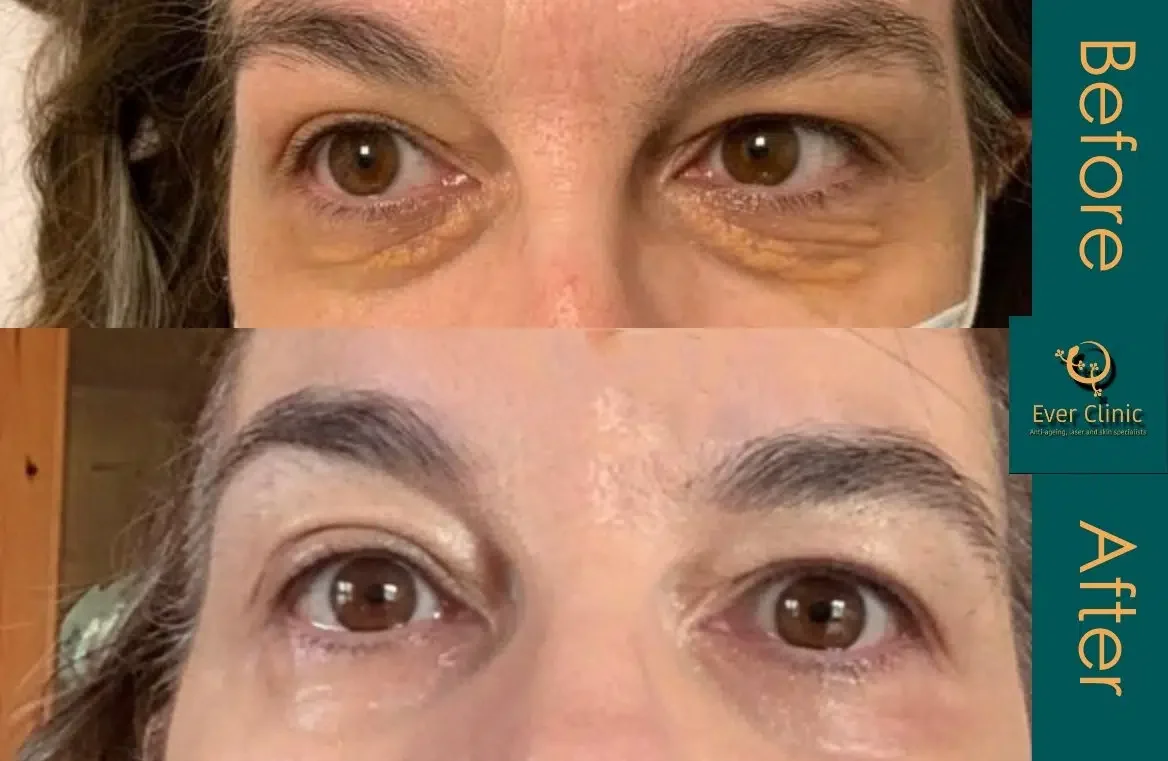
Lesions present clinically as distinct yellowish skin plaques on the eyelids, usually close to the nose.
Incidence in middle-age:
Women – 1.1%
Men – 0.3%
While numerous approaches have been used, we find the most effective and safest method of removal is with Erbium YAG laser. Other methods have a much higher risk of scarring pigmentation change.
It’s important to note that intraocular shields are required when close to, particularly, the upper eyelid. Numbing drops are instilled and this does lead to temporary blurring. Approximately 1% of patients describe a temporary gritty sensation for up to a day afterwards.
Price:
Removal from £995