Skin Lesions
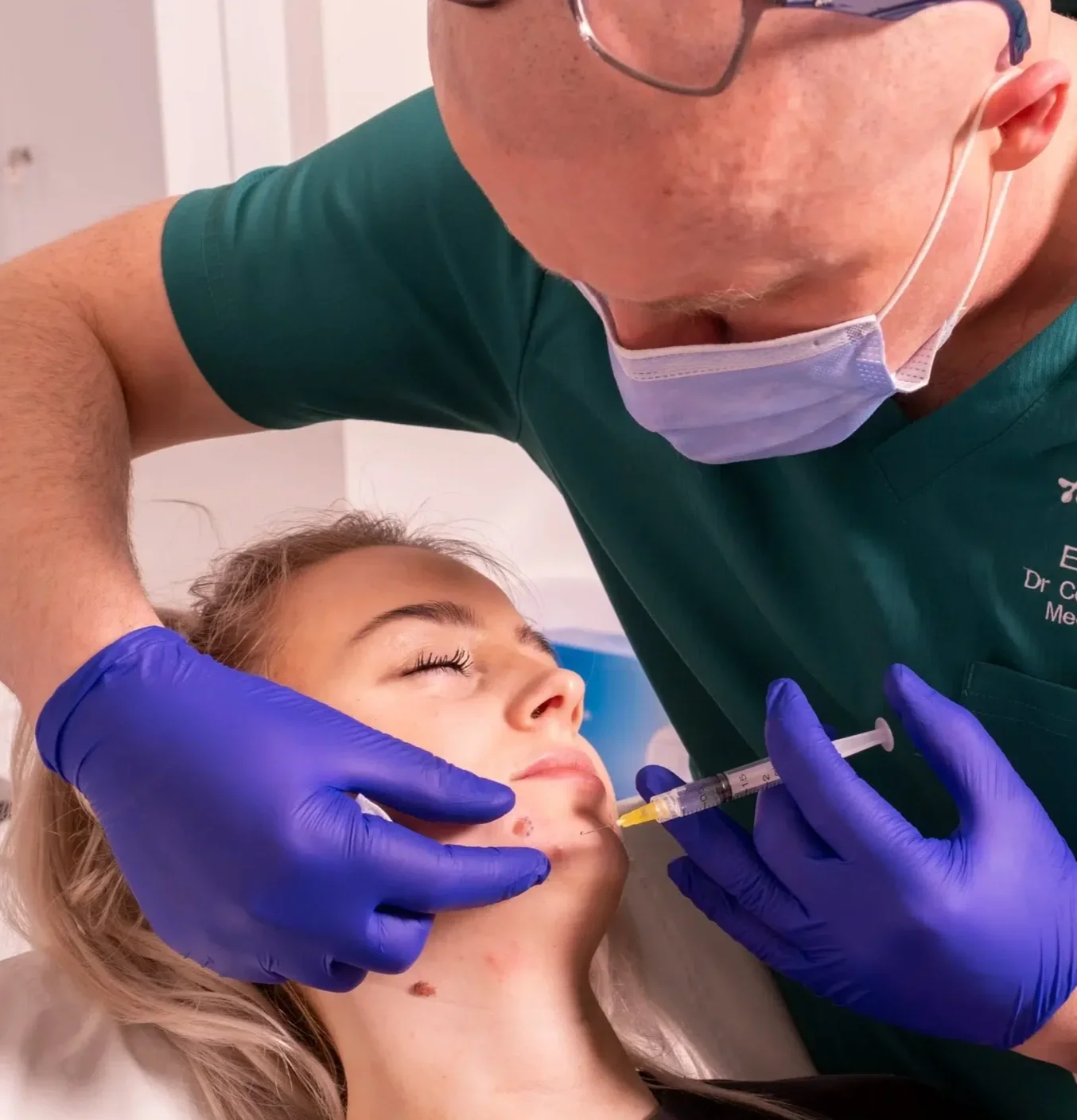
Numbing a Mole (Naevus)
Got a mark, growth or lesion you'd like assessed or removed?
From warts and Cysts to moles and xanthelasma, our doctor-led team can assess and treat a wide range of common skin lesions safely and discreetly.
Skin lesions are common — but that doesn't make them less bothersome, especially if they're somewhere visible or keep catching on clothing or jewellery.
1. Book a consultation for an accurate assessment
2. Understand what it is and what removal involves
3. Have it treated safely, with proper aftercare guidance
Skin lesions are common — but that doesn't make them any less bothersome, especially somewhere visible or somewhere that catches on clothing or jewellery.
Dr Cormac uses a traditional medical model, assessing every lesion, using dermoscopy, UV light and - where needed - ultrasound for a more accurate diagnosis. Where there is any diagnostic uncertainty, best practice mandates sending tissue for pathology.
Why it's worth getting a proper assessment
- Not every lesion is the same, and treating the wrong type the wrong way can cause more problems
- Lesions need to be checked before treatment, not just removed on request
- Some lesions are better assessed using ultrasound before cutting the skin
Each lesion type is assessed individually before any treatment is recommended
Don't leave a lesion untreated or self-treat something that needs a proper assessment first.
Clear skin, the right diagnosis, and one less thing to think about.
Get your skin lesion properly assessed..
Dr Cormac is a GMC registered doctor with 30yrs of experience. He has been specialising in laser usage for 10yrs and is widely recognised around the UK in this regard.
Cysts and lipomas can present on area of skin, but actually live under the skin. It can be difficult to distinguish between the two and Dr Cormac regularly uses ultrasound examination
Warts are typically treated with CO2 laser. On the eyelids, we use Erbium YAG laser instead, for more gentle, controlled ablation.
Please click the button above for more information.
As with warts, skin-tags are normally treated with CO2 laser, with Erbium YAG used on the eyelids for gentler ablation. Some very large “fibrofatty” skintags (usually on the abdomen) take longer to heal and leave a slightly bigger scar.
Please click the button above for more information.
Seborrhoeic Keratoses are typically treated with CO2 laser and curettage. For macular (flat) seborrhoeic keratoses, Pico or Long-pulsed laser may be recommended instead — sometimes combined with Thulium laser - though this depends on context, as broader skin rejuvenation may be the more suitable route in some cases.
Please click the button above for more information.
Every mole is first assessed with dermoscopy. Any mole not judged completely benign is removed for pathology — typically by shave, though excision may be used depending on the mole and its location. Where appropriate, patients are also given the option to simply observe and monitor a mildly irregular mole rather than remove it straight away - the decision on next steps sits with the patient.
Please click the button above for more information.
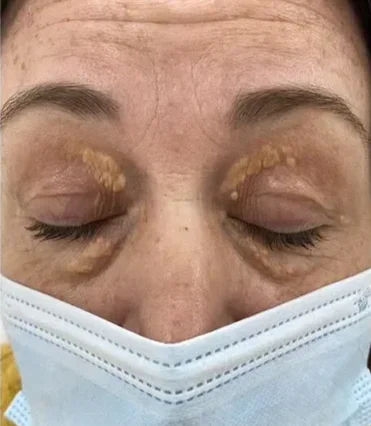
We typically treat Xanthelasma with Erbium YAG laser for its precision, better healing and minimal risk of dyspigmentation. As Erbium YAG laser has no real cautery effect, local cautery is used alongside it to manage any point-bleeding during treatment.
Please click the button above for more information.
After first diagnosing with dermoscopy, vascular lesions are typically treated with our vascular laser, the DermaV. Selective photothermolysis allows targeted destruction of the lesion while preserving the surrounding tissue and skin. Vascular birthmarks such as Port-Wine Stains (PWS) come under this grouping.
Please click the button above for more information.